Guide to math education for dyscalculia
How to teach students with dyscalculia
This Guide provides parents, math teachers, math tutors, educational therapists, and educational psychologists the information and resources needed to teach math for students with a specific learning disability in math - dyscalculia.
It answers addresses following questions:
What books are best for dyscalculia curriculum and lesson planning?
What are the best teaching strategies for a math learning disability?
Where do we begin instruction for dyscalculia?
What multi-sensory math tools do we need?
What is an IEP versus 504 for dyscalculia?
What math accommodations are best for dyscalculia?
How frequent and how long should math lessons or math tutoring be?
Press Play to listen an article & episode for free!
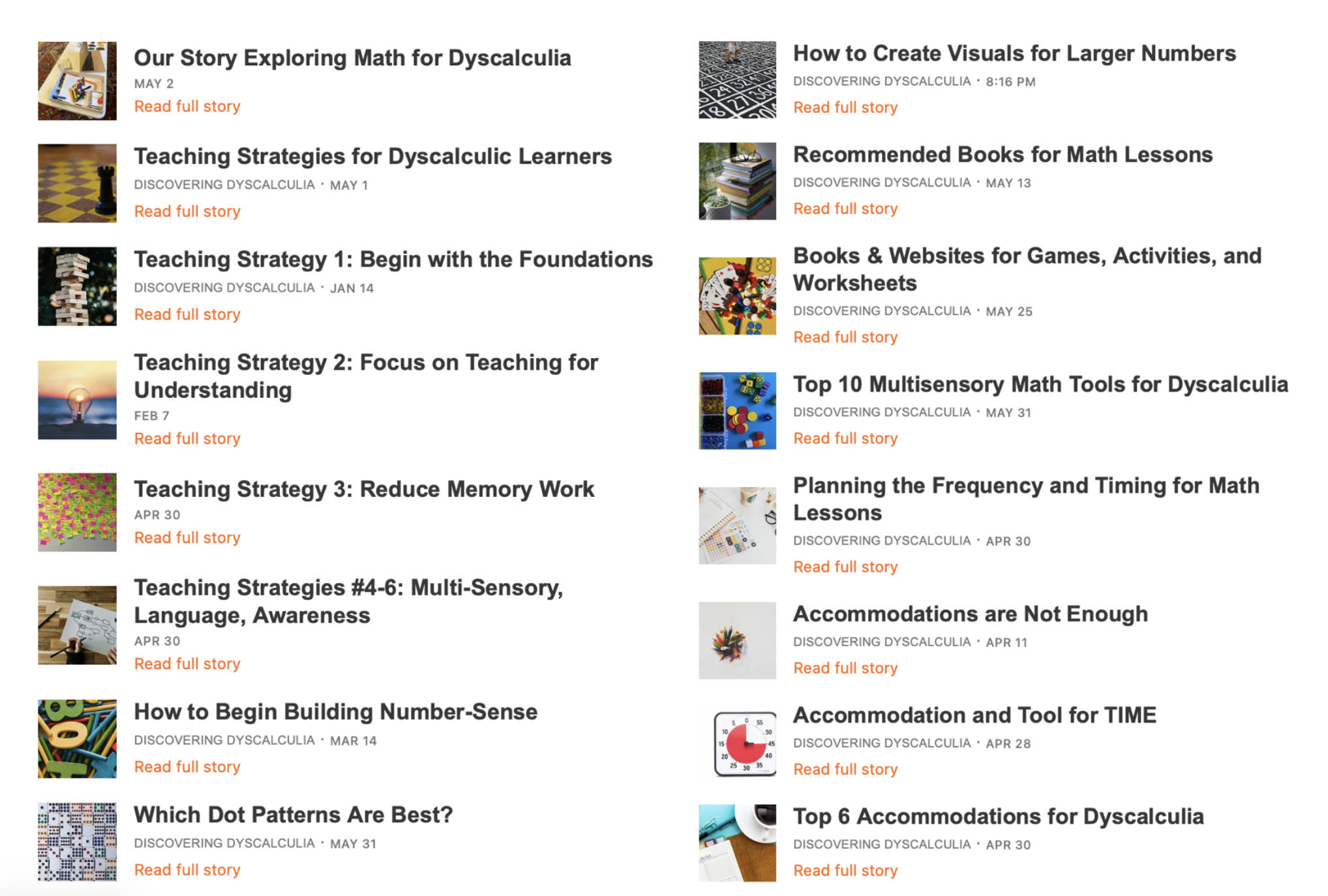
Our Story Exploring Math for Dyscalculia
Teaching Strategies for Dyscalculic Learners
Teaching Strategy #1: Begin with the Foundations
Teaching Strategy 2: Focus on Teaching for Understanding
Teaching Strategy 3: Reduce Memory Work
Teaching Strategies 4-6: Multi-Sensory, Language, Awareness
How to Begin Building Number-Sense
Which Dot Patterns Are Best?
How to Create Visuals for Larger Numbers
Recommended Books for Math Lessons
Books & Websites for Games, Activities, and Worksheets
Top 10 Multisensory Math Tools for Dyscalculia
Planning Frequency and Timing for Math Lessons
Accommodations Are Not Enough
Accommodation for Tool for TIME
Top 6 Accommodations for Dyscalculia
This Guide is being updated on my website
inside the guide
We will explore and answer these questions: Who are the dyscalculia specialists, researchers, and educators to follow? How do we find specific teaching strategies that are successful for dyscalculic students? Is any math instruction better than none when it comes to dyscalculia math education?
We will explore 6 effective teaching strategies for dyscalculia. I include specific examples of how to incorporate them, and how to implement classroom, tutoring sessions, or in the homeschooling experience. These strategies provide a valuable framework for understanding what is needed to help dyscalculic learners in their math learning.
We’ll answer the question “Where do we begin a student’s math instruction?” Knowing where to being is a block for many teachers and parents. I discuss assessments, foundational numeracy considerations, and grade level expectations. I detail the methodology and strategy and work of dot patterns.
I’ll explain the difference between various dyscalculia experts methods for teaching dot patterns - both the double and near-double dot patterns and the dot patterns based on 5. And continue the conversation on visuals and discuss how to create visuals for larger numbers.
I will walk you through specific recommendations for dyscalculia math instruction books. These are specific books to use for your curriculum, lesson plans, and activities. For each book I share its strengths, limitations, how I recommend using it, and the subjects each covers. This episode will save you money so you know exactly what books to buy and how to use them effectively. I’ll incoude books and websites to use for further games, activities, and worksheets I recommend to go with the books in the previous section.
I’ll cover my favorite multisensory tools for working with dyscalculic students. There are so many great options for multisensory math tools available and it can feel overwhelming to know which to choose. This episode keeps it simple for you and explains why each item supports math learning and number-sense.
I’ll provide guidance on planning the timing and frequency for math tutoring lessons or a math intervention program for dyscalculia. I cover frequency of lessons, amount of time for lessons, and how to use the time. I also share my thoughts on the question everyone is wondering, “How long will this dyscalculia math tutoring or intervention take?”
I’ll help you choose the best accommodations for dyscalculia. Choosing and implementing accommodations requires an understanding of the purpose of accommodations, involving students in the process, and knowing how to ensure the student’s accommodations are implemented in the classroom. We will also dig into my top six accommodations for dyscalculia, including practical examples for each. These accommodations are the ones that have stood the test of time and have been helpful to us every year. They are ones I recommend for all dyscalculic learners.
Reviews
“The audio guide helped deepen my understanding of Dyscalculia and I found a lot of great takeaways in terms of where and how to support students.”
“It was a great guide and helped me decide where to start.”
September 2026, I am updating the Guide and making it available on my website. Sign up to be notified as soon as it’s available.